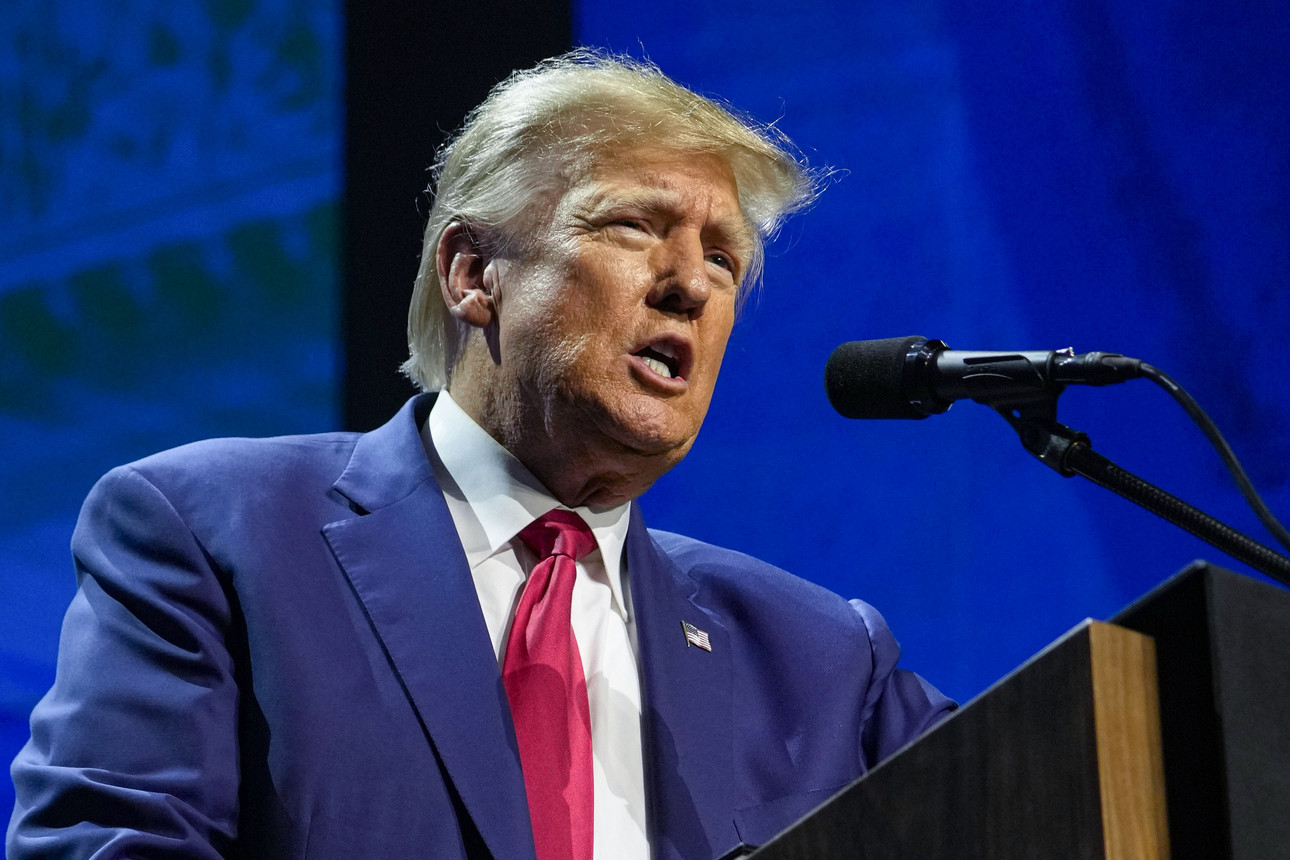
With the clock ticking and a 90-day window coming to a close, former President Donald Trump is rushing to make trade deals or impose tariffs on nations across the world, some of which are rushing to prevent high charges on their imports.
The deadline that was offered by Trump himself after his administration announced wide-ranging tariffs in April is the July 9 date, which can be seen as the end of the grace period that was offered by Trump to nations to either strike a deal with the U.S. or suffer additional tariffs.
A high-profile deal to conclude 90 trade treaties in 90 days has been cut down to size, with a few deals actually anticipated.
However, the magnitude and pace of Trump’s trade manoeuvring have never been witnessed in the recent past. In Europe to Asia, nations are either negotiating high-stakes discussions or are preparing to hit the wall in case nothing is resolved.
The following is an update of the recent developments in some major talks:
Canada: A Deal on Your Horizon
The relationship with Canada has become cold after Trump broke negotiations with Ottawa over a proposed digital services tax, which he called a “blatant attack on our country.”
However, the negotiations relaunched soon after Canada abandoned the plan. According to the officials, the deal is expected to be agreed by 21 July, although the ambassador of the United States to Canada, Pete Hoekstra, states that Canada will not receive only a letter but a complete agreement. Most goods are faced with a 25 percent tariff in Canada.
READ ALSO: Knight in Critical Condition After Sword Pierces Helmet at Bodiam Castle Reenactment
China: Hard Peace
Nonetheless, a major deal involving the U.S and China was signed in June. It fixes American tariffs levied on Chinese imports at 55 percent whereas Chinese tariffs imposed on American commodities are pegged at 10 percent.
The accord also paves the way to trade in important sectors: China has removed export curbs on rare earths, and the U.S. has eased technology controls and is now enabling exports of things such as chip design software and ethane.
European Union: A Tick of Time
The EU seeks an in principle deal by July 9. Negotiations have stalled, particularly on issues of social media laws and control of technology.
Trump had imposed a 20% tariff on EU products calculated to be 20% reciprocal but EU purportedly agreed to 10% on most of their products in exchange in discussing auto and metal tariff rates of 25 and 50% respectively. The EU officials are agitating to reduce the tariffs on other products such as pharmaceuticals, alcohol and semiconductors.
India: A Very Big Deal in the Making
Trump made some references to a big deal with India being imminent. Both negotiating parties have taken their discussions to the next level and are trying to come up with a system that will exempt India a 27% tariff.
Nonetheless, there are disparities: U.S. is interested in Indian opening its market to genetically-modified crops and milk products, whereas India is interested in having some of its exports of steel, auto parts and textiles spared. It is near a compromise, however, the final details are still being ironed out.
Japan: Rice and autos hamper progress
Japan has also been on the receiving end of Trump nitpicking about not accepting the U.S. rice even as he laments at a massive shortage.
Japan already imports a lot of rice duty free, including the U.S., but Trump says they will not be taking our rice and must pay 30 percent or higher. Japan too is negotiating in the dark when it comes to car and metal tariffs, with Prime Minister Shigeru Ishiba confessing that talks are progressing slowly but surely.
South Korea: The Talk is on
South Korea is seeking to have the deadline extended beyond July 9. It claims that tariffs are virtually zero on the current free-trade agreement.
Trump disputes this, arguing that they are four times higher and wants a 26 percent tariff. Recently, South Korean officials have offered a manufacturing alliance and would like to entirely avoid new automobile and steel tariffs.
Thailand: looking forward to get a better bargain like Vietnam
Thailand does intend to conclude a transaction by July 9 and is seeking more favorable terms than Vietnam. It is a reformed plan, which suggests its commitment to cut its trade surplus by 70 percent in five years besides importing more American products and curbing trade cheating.
Thailand had to pay an initial tariff which amounted to 36% and hopefully they are going to be reduced considerably.
United Kingdom: Mostly Accomplished
In June the U.K agreed to cut U.S. tariffs on British cars to 10 percent (on a 27.5 percent level), and to do away with tariffs on aircraft components.
Although it is not all finalized especially concerning metals, most of the agreement has been made. At the G7 summit, Trump and Prime Minister Keir Starmer confirmed the deal together.
Vietnam: An anti-transshipment Deal
Vietnam agreed to a deal which places tariffs on most exports at 20 percent, as compared to the initial 46 percent. However, the small print is a bit deceptive as transshipped goods (particularly those that have been re-routed at China) are still subject to the 40% tax. Vietnam promised no tariffs on American imports, however, it is not clear how transshipment will be measured.
READ ALSO: Idaho Shooter Had ‘N@zi Tendencies’ in School, Say Classmates After Firefighter Attack
What Next, Letters or Deals?
According to Trump, from July 9, nations will either be provided with a deal or a letter informing them about the amount of tariffs to be paid. According to Trump, “We are going to send perhaps 10 letters a day, and some countries are not going to have any agreement, they are going to have a new price of doing business.”
Treasury Secretary Scott Bessent stressed that any country that is unable to negotiate appropriately risks coming back to higher tariffs in April beginning August 1.
Any country that joins BRICS or a group of countries such as Russia, China, and Iran, will not be left behind as it will be slapped with an added 10 percent tariff, Trump warned.
Although the end result of the number of deals might not match the initial target of 90 in 90, the effect will be immense. As tariffs have gone up and trade alliances change, the trading reset under Trump is transforming the way, and with whom, the U.S. trades.
About The Author